The Innovation Revolution Has Already Begun
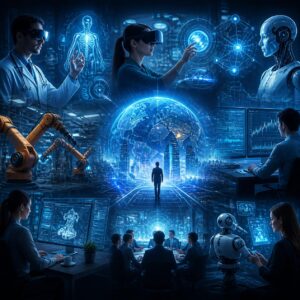
Technology has always been at the forefront of humanity’s evolution. From the invention of the Internet to smartphones and cloud computing, every major technological innovation has had a tremendous impact on society. Today, we are witnessing the dawn of a new era of technology that is set to disrupt all aspects of our lives.
Unlike previous technologies, emerging innovations have come to life at breakneck speeds, transforming industries at an unprecedented rate. Artificial Intelligence, for example, has become deeply embedded within our professional and personal lives while quantum computing enables scientific breakthroughs previously thought to be impossible. Advanced connectivity is also propelling the development of an increasingly digital and automated world.
All this technological change makes it imperative for businesses to adapt or get left behind. Organizations that embrace these technological advances will be rewarded with increased profits, productivity, and performance, while companies that fail to evolve will experience the opposite outcome. It is also essential for individuals to understand and develop their knowledge of these powerful new innovations.
In this article, you’ll learn more about the 10 biggest technologies that are going to change the world in 2026. We’ll also explore their potential applications and how they’re set to disrupt a wide range of industries.
- Artificial Intelligence (AI)
Artificial Intelligence has already had a profound impact on the modern workplace, and its influence is set to grow exponentially over the next decade. AI has become an extremely valuable tool for enterprises looking to increase productivity and performance by automating repetitive tasks, analyzing large amounts of data, improving customer relations, and much more. For instance, most modern-day businesses utilize AI to power chatbots and other virtual assistants, while AI algorithms help companies automate a wide range of processes.
Beyond chatbots, the next wave of AI will include intelligent AI agents that will be able to complete increasingly complex tasks on their own with little or no human supervision. Over the next decade, AI will continue to transform the workplace and become an indispensable asset in a wide range of industries.
Why it matters:
Improves productivity and performance.
Increases efficiency.
Facilitates innovation and transformation.
Empowers businesses to make smarter decisions.
- Quantum Computing
Quantum computers have the potential to revolutionize the way we approach computing and problem-solving. Unlike ordinary computers that use bits to process and store information, quantum computers utilize qubits that hold considerably more information. While still in its infancy, quantum computing has the potential to tackle a broad range of previously unsolvable problems, including complex physics equations and complicated logistics calculations.
Researchers are already working on a wide range of quantum-inspired innovations, and this emerging technology has the potential to redefine numerous industries in the coming years. For instance, scientists believe that quantum computing could lead to significant pharmaceutical breakthroughs while improving cybersecurity and financial modeling.
Key opportunities:
Revolutionary pharmaceutical discoveries.
Enhanced data encryption.
More accurate financial modeling.
Smarter logistics and more efficient supply chains.
- Extended Reality (XR)
Extended Reality (XR) is an umbrella term for a broad range of immersive digital experiences that include Virtual Reality (VR), Augmented Reality (AR), and Mixed Reality (MR). Over the last few years, hardware manufacturers have worked tirelessly to develop lightweight, powerful, and affordable XR headsets that enable people to engage with various digital content in innovative ways.
Beyond being a compelling entertainment medium, VR and AR are also being leveraged to create entirely new digital experiences. Doctors use VR to simulate surgeries and develop new treatment plans, while engineers rely on augmented reality to visualize complicated machinery. Companies also utilize extended reality to take customers on virtual tours of their facilities and design processes. Extended Reality is also being used to enable remote collaboration in construction, manufacturing, and engineering.
The convergence of extended reality and artificial intelligence is also set to play a critical role in transforming the digital and physical worlds.
Why XR is taking off:
Immersive learning experiences.
Improved collaboration and productivity.
Transformative customer experiences.
More efficient and cost-effective training.


- Blockchain / Web3
For many people around the world, the term blockchain is inexorably linked to the rise of cryptocurrencies. While blockchain and cryptocurrencies are inextricably linked, blockchain technology has matured considerably and is now being utilized to develop groundbreaking products and services. In 2026, blockchain is no longer just about cryptocurrencies; it encompasses a much broader set of products and services that facilitate faster and more secure digital transactions.
Blockchain technology enables decentralized applications that provide greater accountability and transparency while eliminating the need for third-party oversight. For instance, blockchain technology allows for easier recording of financial transactions, making it significantly more difficult to commit fraud. This characteristic of blockchain has made it tremendously attractive in the banking sector, with major financial institutions utilizing this emerging technology to streamline financial transactions.
Blockchain technology has the potential to disrupt numerous other industries as well. Beyond transforming banking and finance, blockchain could also revolutionize the healthcare sector and supply chains. The technology could also be utilized to digitize government services and empower organizations to design new digital IDs.
Besides blockchain, 2026 will also witness the rise of Web3. Web3 refers to a new iteration of the internet that empowers individuals and organizations to gain greater control over their digital presence and content. By leveraging a combination of decentralization and cryptography, Web3 aims to usher in a new era of innovation and disruptive technologies. Although still in its infancy, Web3 has the potential to fundamentally redefine the internet landscape in years to come.
Why blockchain and web3 matter:
Greater transparency and trust.
Increased cybersecurity and data protection.
More efficient digital transactions.
Eliminate fraud and reduce cost.
Build decentralized apps (dApps).
- Internet of Things (IoT)
The Internet of Things (IoT) has been one of the most transformative technologies in recent years. Everyday electronic devices are now connected to the internet and constantly collect and exchange information with other devices in real-time. IoT has been leveraged to develop highly sophisticated smart homes and cars that are intuitive and user-friendly. For instance, smart thermostats can be programmed to learn the owner’s preferences and adjust the temperature in the house accordingly. Smart speakers can also be used to play music, set reminders, and complete numerous other tasks.
Beyond being a force enabler in the consumer space, IoT is also set to revolutionize a wide range of industries. For instance, sensors play an integral role in making machines smarter and automating processes, which enhances efficiency and reduces downtime. The industrial IoT (IIoT) is being leveraged to monitor equipment and develop predictive maintenance plans that ultimately prolong the lifespan of machinery. Additionally, the IIoT is enabling farmers to optimize water use and ensure bountiful harvests with minimal effort. Similarly, connected medical devices are being utilized to keep track of patients’ vital signs remotely.
IoT has the potential to be one of the most disruptive technologies in the years to come, and 5G networks will further catalyze its proliferation. Analysts are projecting that billions of IoT devices will be connected to the internet in the next five to ten years. However, as IoT continues to gain ground around the globe, businesses must implement robust cybersecurity infrastructure, ensuring that all digital assets are well-protected against cyber threats.
Key opportunities with IoT:
Increased efficiency and productivity.
Enhanced security and privacy.
Optimized operations and predictive maintenance.
Smart homes.
Smart cities.
Smart healthcare.

- 5G and the Road to 6G
The digital economy is being driven by one critical technology: connectivity. Next-generation connectivity will continue to play a pivotal role in fueling digital disruption and enabling an increasingly automated and digitized world where everything is connected to the internet. 5G networks are already being rolled out across the world at a rapid pace, but telecommunications companies and network builders are already developing the technology that will eventually replace 5G in a few years. This emerging technology is referred to as 6G, and it will play a critical role in enabling the next phase of digital transformation.
5G has already unlocked numerous applications and services, including autonomous vehicles, telematics, drones, cloud gaming, and automated manufacturing. 6G is expected to take connectivity to the next level by enabling even faster data transmission speeds and facilitating next-generation applications and services that have not been possible before.
While still several years away, 6G networks will allow businesses to develop intelligent digital ecosystems that drive exponential growth and disrupt traditional markets. 6G networks will also facilitate new breakthroughs in artificial intelligence, holography, and connected smart cities.
Why next-generation connectivity is a game-changer:
Next-generation connectivity will make everything smarter.
Ultra-low latency networks will enable holographic experiences.
6G networks will facilitate next-gen AI applications.
Accelerate cloud gaming capabilities and performance.
Unlock new opportunities in connected cities.
Enable automated manufacturing and operations.
- Robotics and Intelligent Automation
Robotic technologies and intelligent automation have come a long way and continue to evolve at an unprecedented rate. Robots can now be found in a broad range of industries, taking over several monotonous and repetitive tasks that were previously performed by humans. Modern-day robots also feature artificial intelligence, powerful sensors, and cameras, allowing companies to utilize these machines in a wider array of applications.
For instance, robots are being used in manufacturing, healthcare, logistics, and even the hospitality sector. Cobots, also referred to as robotic coworkers, work alongside human workers on assembly lines. These robots take over several repetitive tasks, allowing their human counterparts to focus on less monotonous tasks. Surgical robots, on the other hand, are being used in the medical field to complete a variety of procedures with exceptional precision.
Beyond cobots and surgical robots, other robots are being utilized in the logistics and transport sector. These machines are used in warehouses to identify and pick products and subsequently place them in boxes. Robots are also being used by businesses to provide exceptional customer service. They can be seen in hotels, airports, food delivery, and the retail space.
The robotics industry is growing at an astonishing rate, and intelligent automation will play an increasingly critical role in a wide range of industries in the years ahead.
Key benefits of robotics and intelligent automation:
Increased productivity.
Improved operational efficiency and performance.
Enhanced precision.
Greater workplace safety.
Cost savings.
- Biotechnology and Gene Editing
Biotechnology is one of the most exciting fields in scientific research, combining the best elements of biology and technology to unlock unprecedented medical advancements and disrupt a broad range of industries. Artificial intelligence plays an integral role in modern biotechnology, fueling innovation and enabling incredible breakthroughs at an incredibly rapid pace. Gene editing, for instance, has seen phenomenal progress in recent years, fueling hopes that several diseases and medical conditions can be eliminated in the years to come. Tools like CRISPR have allowed scientists to modify DNA and potentially cure diseases, including cancer.
Another critical area of biotechnology is drug development. Thanks to artificial intelligence, researchers can now leverage genomic data and conduct extensive research in a relatively short period. This has significantly accelerated the drug discovery and development process.
Biotechnology also plays a crucial role in modern-day agriculture and environmental conservation. Researchers are using biological technology to create innovative solutions, including water-efficient crops and groundbreaking materials. This technology is also being utilized to develop new treatments, as well as sustainable food and agriculture systems.
There is no doubt that biotechnology will be at the forefront of numerous medical, scientific, and technological breakthroughs in the years to come.
Why biotech matters:
Accelerate medical discoveries.
Enable precision medicine and personalized healthcare.
Create smart materials and groundbreaking innovations.
Drive agricultural sustainability.
Leverage AI to make the world a healthier and safer place.
- Green Technology and Clean Energy
Technology has been a critical enabler when it comes to promoting sustainability and conserving the environment. Green Technology (GreenTech) has played a pivotal role in ensuring that our operations and processes are energy-efficient, sustainable, and environmentally friendly. This innovative field has been leveraged to develop cutting-edge green solutions that can help reduce the environmental impact of industries and conserve natural resources.
Renewable energy technologies have proliferated in record time over the last decade. Solar energy, wind power, and battery storage have all seen significant improvements, propelling the global transition towards sustainable energy. In 2026, these technologies will continue to be instrumental in helping the world move towards net-zero emissions.
Artificial Intelligence will continue to play a critical role in helping the globe reduce its carbon footprint and transition to clean and renewable energy. For instance, smart power grids are being utilized to enhance power system performance and make the distribution and consumption of electricity more efficient. AI can also be used to monitor the performance of wind and solar installations, ensuring that these systems function optimally and generate the maximum amount of energy.
Numerous companies are also developing new innovations and disruptive technologies that will play an integral role in promoting sustainability. These include smart and sustainable construction materials, intelligent recycling facilities, smart waste management systems, electric vehicles, and much more. Hydrogen fuel and sustainable aviation technologies will also be crucial in reducing carbon emissions in years to come.
Green Technology is a critical component of the overall digital transformation taking place across the world today. In the coming years, this space will continue to experience exponential growth, with businesses investing significantly in R&D to develop groundbreaking solutions and products that will conserve the environment while at the same time generating substantial revenues.
Why Green Technology matters:
Reduce carbon emissions and promote environmental conservation.
Maximize efficiency and reduce waste.
Drive economic growth and promote innovation.
Accelerate the transition to renewable energy sources.
Create new industries and jobs.
- Cybersecurity and AI-Powered Digital Security
With businesses becoming more digitized, cybersecurity has become one of the most critical technologies in the world today. Every company that utilizes digital technologies to conduct its operations or store critical data needs to invest significantly in cybersecurity capabilities to protect its systems and data. Cyber risks and threats have also evolved considerably in recent years, becoming much more sophisticated and challenging to detect and neutralize.
Traditional cybersecurity measures and tools are no longer sufficient in detecting and countering modern cyber threats. This is why artificial intelligence is becoming extremely valuable in strengthening digital defenses and securing data, networks, cloud storage, and other digital assets. AI can be used to detect cyber threats in real-time and eliminate them before they do significant damage.
Digital security solutions are also being enhanced through AI and machine learning to help organizations detect vulnerabilities and bolster their defenses against cyber threats. Cybersecurity experts also use AI to monitor and mitigate DDoS attacks, ransomware, zero-day exploits, and other malicious activities.
Another powerful cybersecurity technology that enterprises are adopting is the Zero Trust Security Model, which assumes that everyone and everything is a potential security threat. This security framework enables businesses to detect and neutralize cyber threats before they have an adverse impact on their data, systems, and networks.
Cybersecurity is also being enhanced through biometric authentication and identity verification solutions that are much more secure than traditional passwords. These security solutions are playing an integral role in ensuring that only authorized personnel can access restricted information and systems.
However, it is essential to recognize that cybersecurity is not just about adopting the latest technologies and solutions. Companies and individuals need to implement cybersecurity best practices and stay vigilant at all times to reduce the risk of cyber attacks and threats.
Cybersecurity is one of the most critical areas where artificial intelligence and machine learning can be leveraged to detect and neutralize cyber threats in real-time. However, the battle between cybersecurity professionals and hackers will likely continue for years to come as both sides continue to develop increasingly sophisticated tactics and strategies.

Key cybersecurity benefits:
Real-time cyber threat detection and mitigation.
Improved fraud detection and prevention.
Enhanced identity protection.
Advanced zero-trust security systems.
Greater protection against increasingly sophisticated cyber-attacks.
Emerging Technologies Are Coming Together to Shape the Future World
Thanks to artificial intelligence and other advanced technologies, enterprises across the globe are transforming and disrupting numerous industries and markets. The next decade will see these technologies become even more powerful, driving exponential growth, innovation, and business transformation.
Companies that embrace the power of emerging technologies and understand their potential applications will be in a position to maximize their profits and dominate their respective markets. At the same time, individuals should also invest time and effort in learning more about these groundbreaking technologies since they are set to redefine the future of work.
Conclusion
The technologies that will define our future are no longer just things of the future. These ideas, concepts, and systems are already here and around us, helping to shape our communication, education, work, transportation, health care, and even commercial organizations.
The defining characteristic of this period is that there is not one dominant technology.
Artificial Intelligence, Quantum Computing, Blockchain, the Internet of Things, Green Technology, and Robotics are all promising innovations that, when combined with Cyber Security, Biotechnology, and new communication networks, will form the foundation for our digital society of tomorrow. But raw technology will only take us so far. It is those who understand how to learn and adapt, who will thrive and dominate in this new world. Technical expertise will always be valuable, but critical thinking and imagination, creativity, and even ethics, will be crucial abilities in the years to come.
Regardless of whether you want to build the next big thing or simply prepare yourself for when it arrives, staying up-to-date on emerging technologies is essential. And the good news is, as a beginning learner, you have plenty of options for getting involved and investing your time in something that will pay off for years to come.
So let’s begin!
Frequently Asked Questions
What are emerging technologies?
These are innovative technologies that have the potential to dramatically change the business world and day-to-day human life. Some examples of these are Artificial Intelligence, Quantum Computing, Robotics, Blockchain, Internet of Things, and Green Technology.
Why are emerging technologies important?
They are important because they increase productivity and address challenges both in the business world and the world at large.
Which one stands to have the most impact?
Artificial Intelligence seems to be the primary driver of innovation, as it is already being integrated into almost all aspects of human life, from healthcare and education to business, government, software design, marketing, and more.
Do they threaten to make humans obsolete?
While certain aspects of jobs, particularly those that involve repetitive tasks, may be automated, many other jobs, particularly those that require critical thinking, will be made easier by new technologies. Additionally, many new jobs will be created in the fields related to emerging tech.
How can someone just starting out get involved and begin to learn?
The best thing to do is to start with the basics, such as how artificial intelligence works, how cloud computing works, how to keep your digital information secure, what blockchain technology is, and similar topics. You should also follow technology news outlets to stay up-to-date on the latest developments in the space, as well as find ways to test-drive new innovations whenever possible.
What skills will be most in-demand and most valuable in the future?
Skills in critical thinking, particularly in regards to artificial intelligence, will be necessary in almost all industries. Additionally, most jobs will require a certain level of digital literacy, cybersecurity knowledge, and creativity.
Final Thought
As you can see, technology is changing, and it is doing so at an extremely rapid pace. But long before computers, the internet, and even smartphones, there was already innovation. There were people who thought of new ideas and pushed themselves to think of ways to make life better.
Emerging technologies will continue to drive the future for the next decade or more, but it is those who are willing to embrace change and put in the effort to learn that will find the most success in the years to come.